From Car Seat to Canvas: A Practice in Motion
Sketchbooks made in transit become the quiet architecture behind layered, constructed paintings
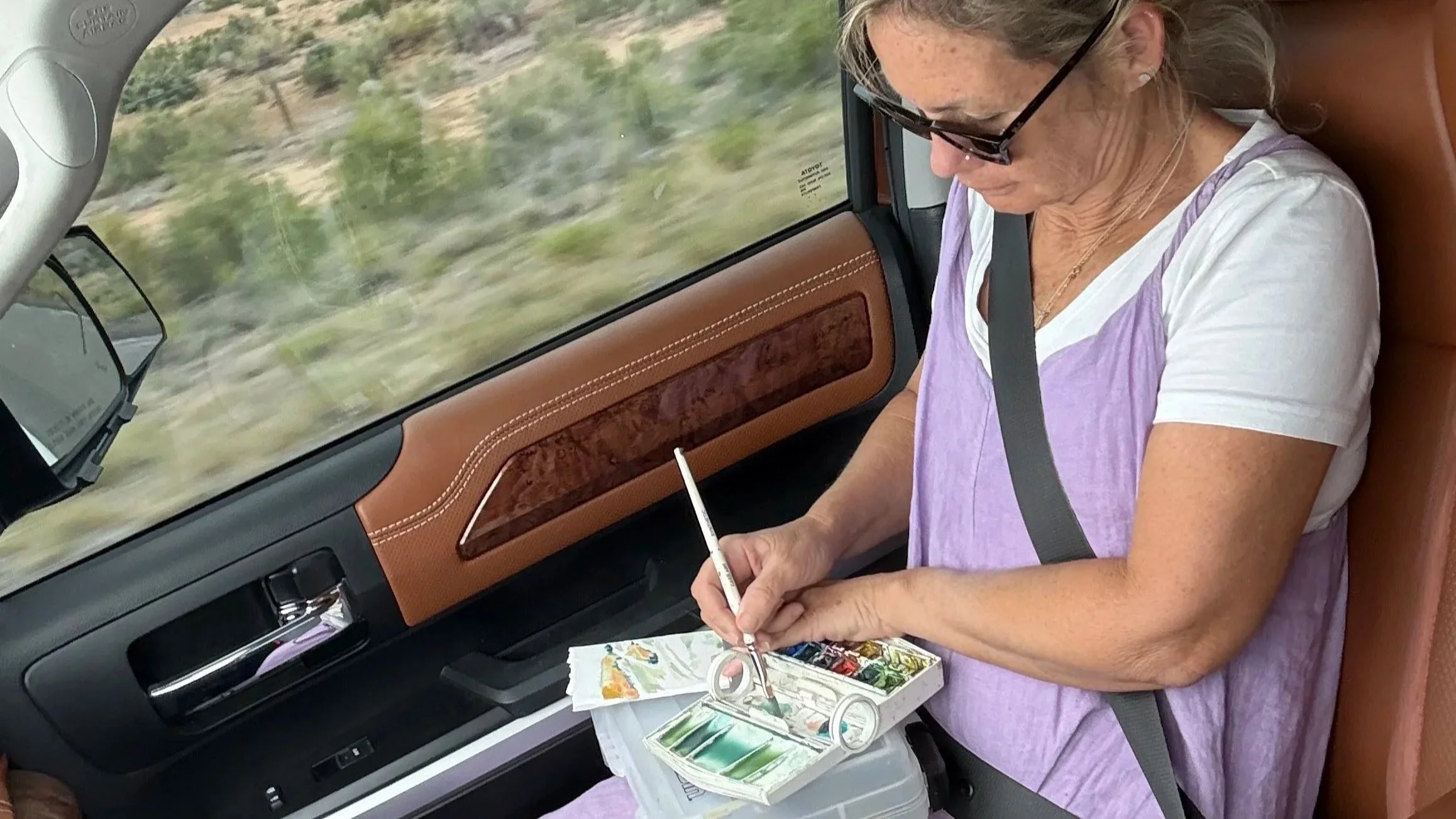
Sketching on my lap as the world flashes by.
My practice moves between two ways of working: on-the-road sketching and studio-based mixed media painting. Each informs the other, but they operate with different intentions, materials, and levels of intensity.
When travelling, I work quickly and directly from observation. Many of these drawings are made from a car seat, or during pauses in movement; looking out of windows as the landscape shifts and disappears. I work with watercolour, pen, and pencil on paper, keeping the materials light and responsive.
These sketches are not concerned with resolution. They are immediate responses to changing light, passing terrain, and fleeting compositions. Colour is often restrained, and the emphasis is on structure, line, and spatial relationships rather than saturation or finish. They function as records of looking rather than fixed interpretations.
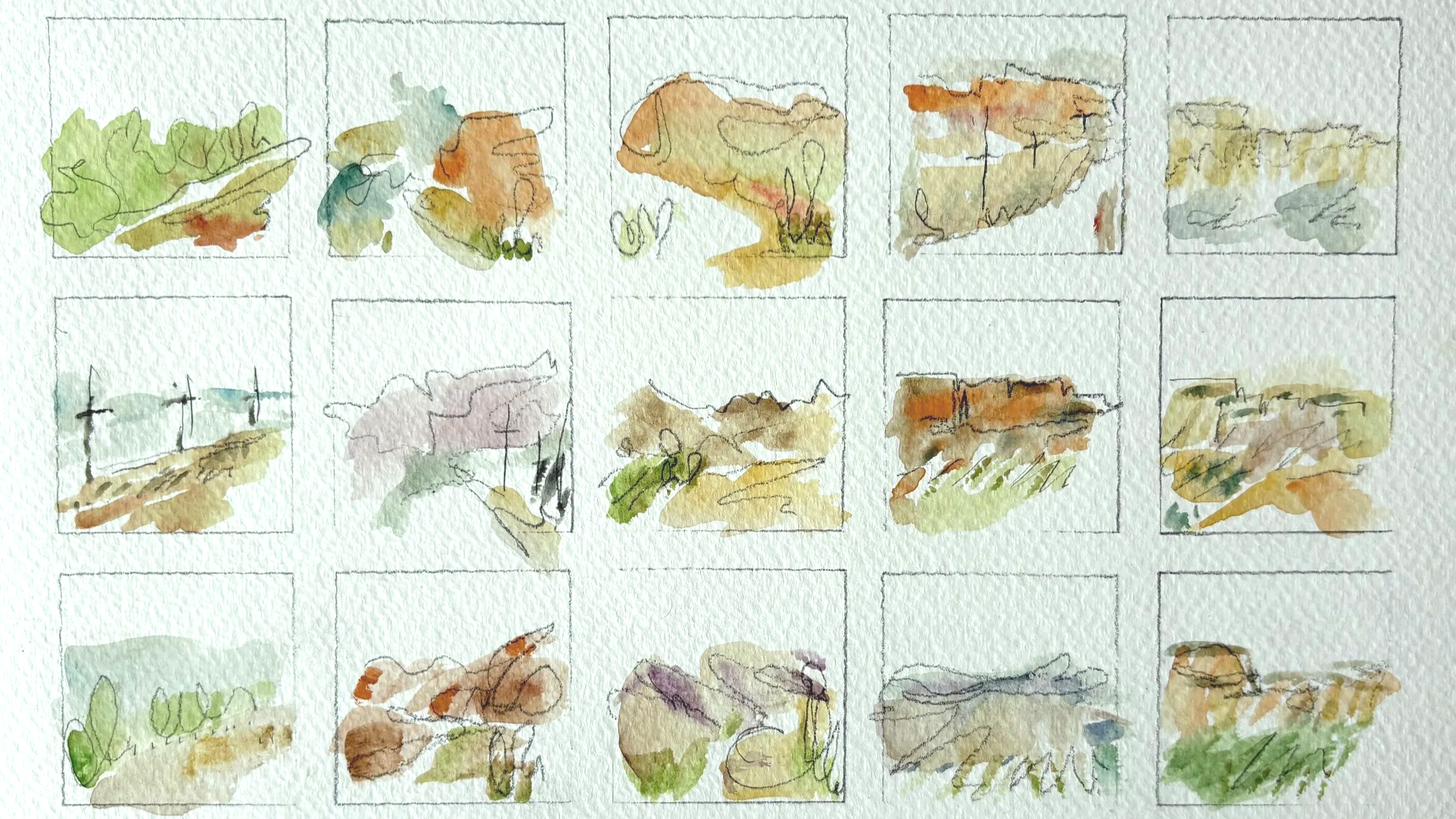
Detail of mixed media water colour sketches created in the car.
In contrast, my studio practice is more layered and constructed. Working on canvas, I use acrylic paint alongside pens, pencils, pastels, and collage. The surfaces build over time, allowing for revision, interruption, and reworking. Here, colour becomes more expressive and heightened, and the compositions are developed rather than discovered in the moment.
The subject matter also shifts between the two bodies of work. The sketches tend to hold landscapes—roadsides, horizons, architectural fragments, and transitional spaces. In the studio, these observations are transformed into more imagined or constructed scenes, often centred around dancers, horses, and figures in motion.
Although the subject matter differs, there is a continuous exchange between the two practices. The sketchbooks hold the structural memory of place: rhythm, proportion, distance, and movement. These elements often reappear in the studio work, not as direct reproductions, but as underlying frameworks or visual instincts.
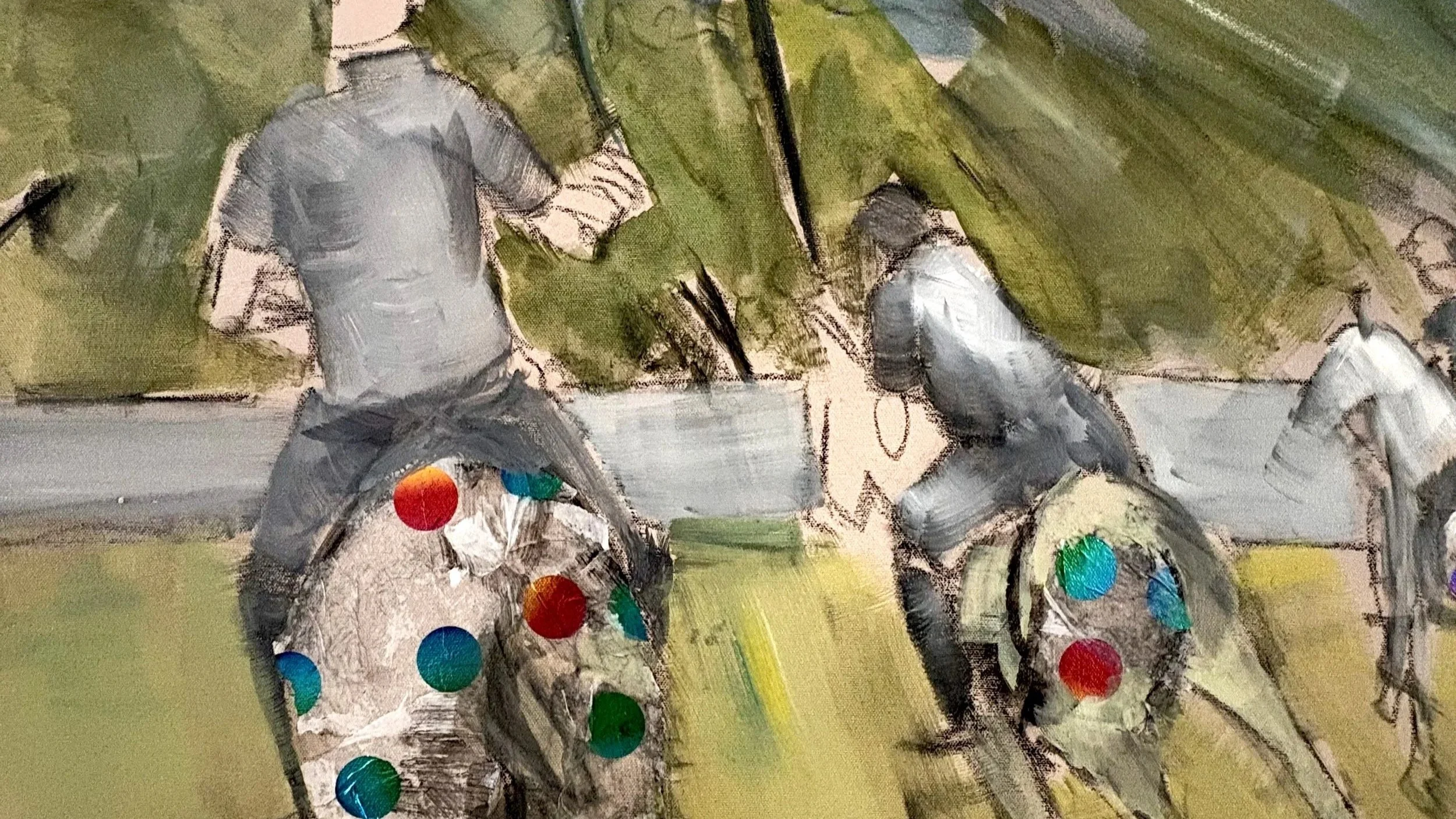
In the studio the process begins. Collage papers, charcoal, acrylic blocking shapes.
Over time, I see the sketchbooks as a form of visual thinking, an ongoing process of noticing and editing. They are not preparatory studies in a conventional sense, but an independent strand of the practice that feeds the language of the paintings in less literal ways.
The studio then becomes a space for transformation. Observed fragments are reworked into layered compositions where movement, gesture, and narrative are amplified. Colour expands, surfaces accumulate, and the work shifts away from documentation towards interpretation.
Together, these two modes form a connected cycle. One is rooted in immediacy and restraint; the other in construction and complexity. Both are essential to how I understand and develop visual language across drawing and painting.
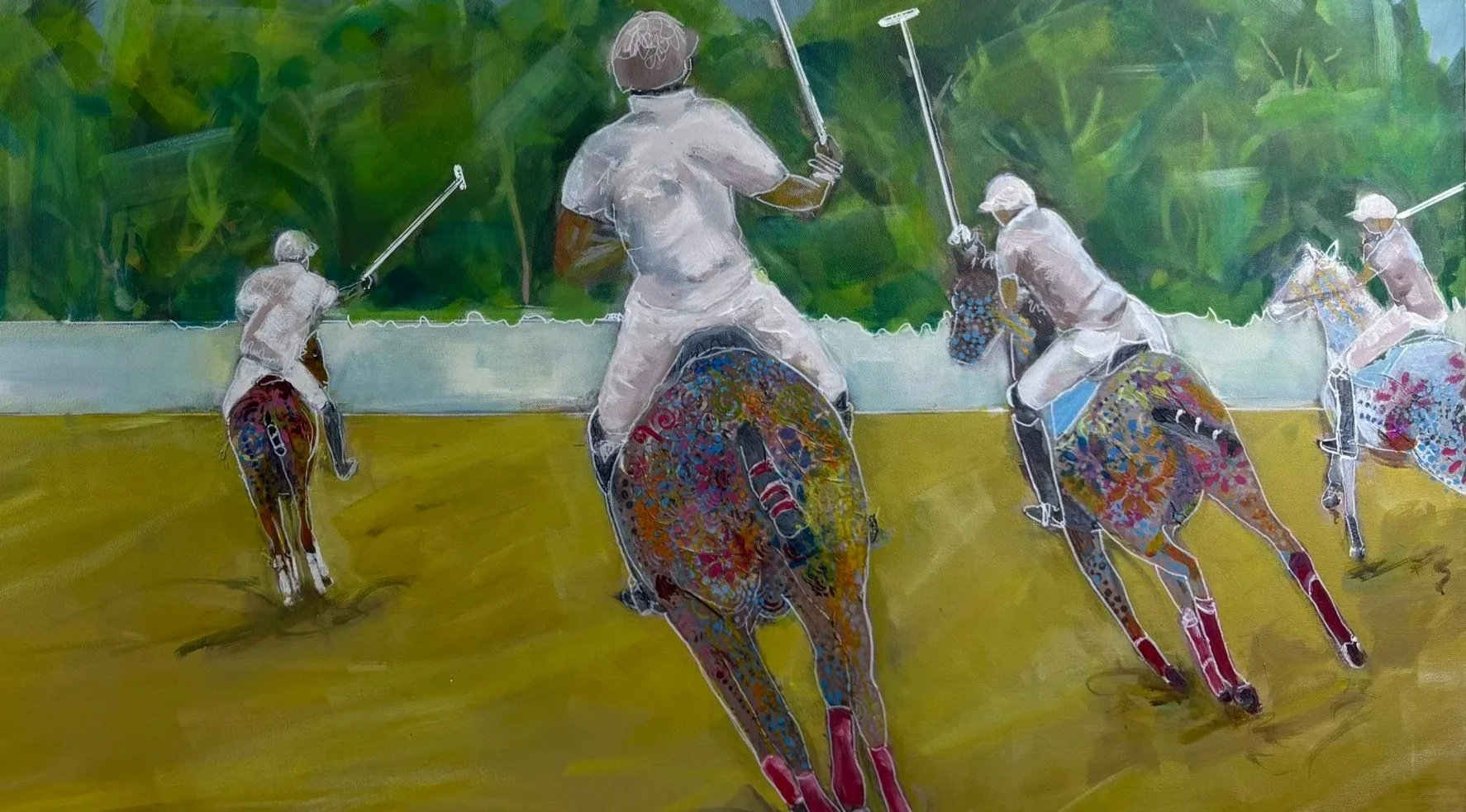
Eyes on the Ball detail of finished piece. Polka dots are under stencils and pen and paint!